
What if something you normally throw into the trash could have another use in your garden?
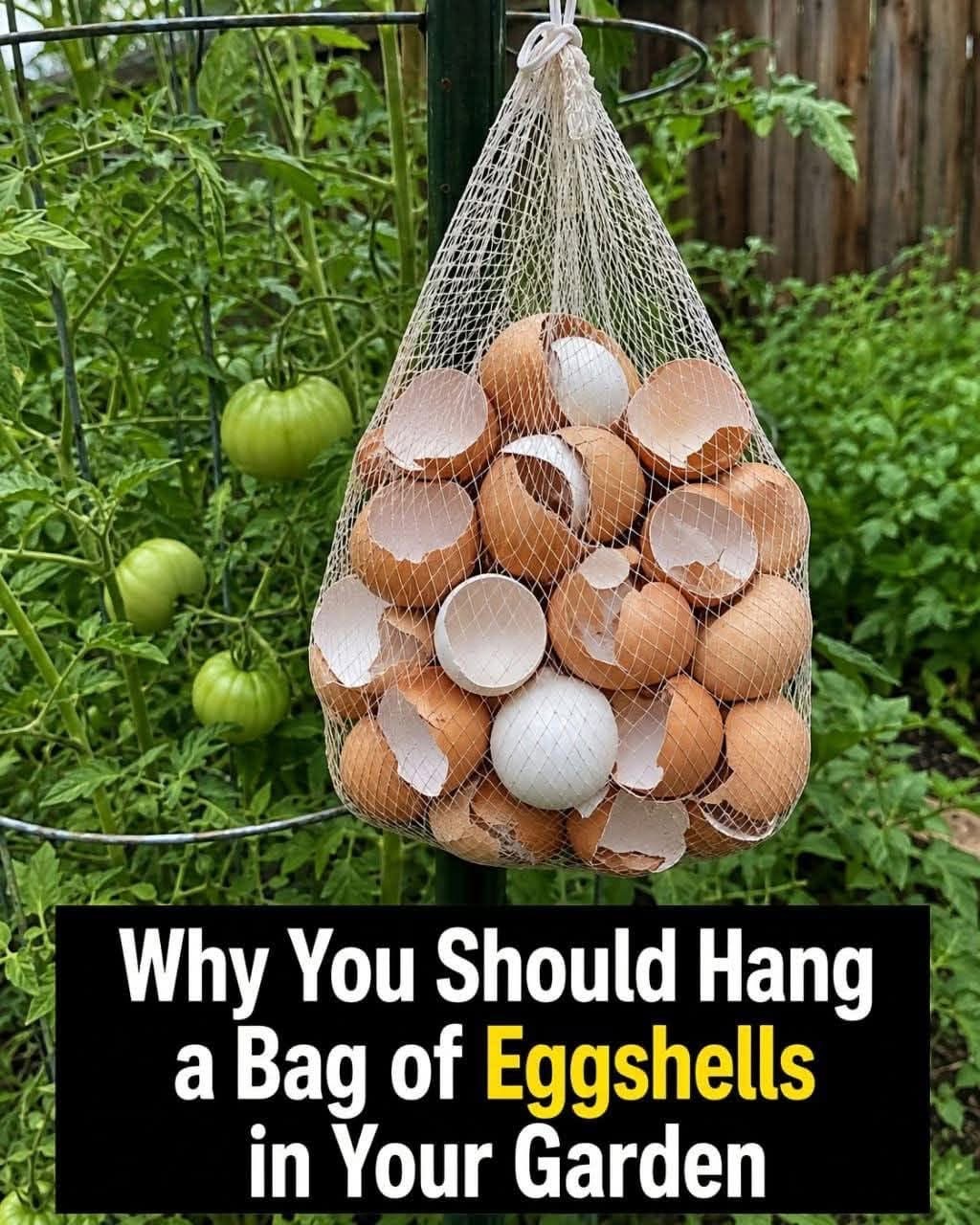
Eggshells are made primarily of calcium carbonate, and gardeners have traditionally reused them in different ways. One popular trick is to crush the shells and place them around plants, while some people even hang eggshells in the garden to try to discourage certain pests.
But does hanging eggshells really work? The answer is a little more complicated than viral gardening posts suggest.
Why Do People Hang Eggshells in the Garden?
The idea is that the bright, irregular pieces of eggshell may make some birds or garden pests uncomfortable or discourage them from approaching certain areas.
However, there is limited scientific evidence that simply hanging eggshells is a reliable pest-control method. It may be harmless to experiment with, but it shouldn’t be considered a guaranteed way to protect your plants.
Eggshells have more practical uses when they are properly prepared and incorporated into the soil or compost.
7 Useful Ways to Reuse Eggshells in Your Garden
1. Add Calcium to the Soil
Eggshells contain a large amount of calcium carbonate.
When finely crushed and incorporated into acidic soil, eggshell material can eventually contribute calcium and may help raise soil pH.
However, whole or large pieces of eggshell break down very slowly, so don’t expect an immediate effect.
2. Add Them to Compost
Clean, crushed eggshells can be added to a compost pile.
They contribute minerals to the finished compost, although they aren’t a substitute for the main ingredients of healthy compost such as plant material and other organic matter.
3. Make a Fine Eggshell Powder
One of the most useful ways to reuse eggshells is to grind them very finely.
Wash the shells, allow them to dry completely, and crush or grind them into a powder.
The smaller the particles, the more surface area there is for gradual breakdown.
4. Use Them Around Certain Plants
Finely crushed eggshells can be incorporated into garden soil around plants.
Keep in mind that eggshells are not a complete fertilizer. They provide mainly calcium and contain only small amounts of other nutrients.
If your soil already has sufficient calcium, adding more may provide little benefit.
5. Reduce Kitchen Waste
Even when eggshells don’t dramatically improve your garden, recycling them is a simple way to reduce household waste.
Instead of sending the shells straight to the garbage, you can clean, dry, crush, and compost them.
6. Experiment With Pest Barriers
Some gardeners spread coarse eggshell pieces around plants because they believe the sharp edges discourage soft-bodied pests such as slugs and snails.
The effectiveness of this method is questionable, and eggshells should not be relied upon as a proven slug-control treatment.
If you’re dealing with a serious infestation, established pest-management methods are more dependable.
7. Use Them as Part of a Sustainable Garden Routine
Eggshells work best as one small part of a larger gardening system.
Healthy soil, appropriate watering, good drainage, sufficient sunlight, compost, crop rotation, and proper pest management will have a much greater effect on plant growth than eggshells alone.
How to Prepare Eggshells for the Garden
If you want to try this traditional method, preparation is simple.
You’ll Need
- Clean eggshells
- Water
- A tray
- A blender, coffee grinder, mortar and pestle, or rolling pin
Directions
- Rinse the eggshells thoroughly.
- Remove any remaining egg residue.
- Allow the shells to dry completely.
- Crush them into small pieces.
- For faster breakdown, grind them into a fine powder.
- Mix the powder into your compost or soil.
Avoid leaving wet eggshells sitting around for long periods because leftover organic material can attract unwanted odors or pests.
What About Hanging Eggshells?
If you want to try the viral hanging-eggshell trick, you can place clean, dry shells in a small mesh bag or container and hang them near plants.
Just keep expectations realistic.
There is no strong evidence that hanging eggshells will reliably repel garden pests or dramatically improve plant growth. Think of it as a harmless gardening experiment rather than a guaranteed secret.
A Better Eggshell Trick
If your goal is to actually make use of the calcium in eggshells, finely grinding them and incorporating them into acidic soil or compost is generally more practical than simply hanging them from a plant.
Before adding large amounts, it’s worth knowing your soil’s pH and nutrient levels. Some plants prefer acidic soil, while others tolerate or prefer more neutral conditions.
Common Eggshell Gardening Myths
“Eggshells are a complete fertilizer.”
Not true.
Eggshells are primarily calcium carbonate. Plants require many other nutrients, including nitrogen, phosphorus, potassium, magnesium, sulfur, and micronutrients.
“Eggshells instantly give plants calcium.”
Not usually.
Large pieces can take a long time to break down. Finely powdered shells are much more readily available over time.
“Eggshells will eliminate all slugs.”
There isn’t strong evidence supporting this claim. Don’t depend on eggshells alone if you’re dealing with a significant slug problem.
“More eggshells are always better.”
Not necessarily.
Adding excessive calcium or unnecessarily increasing soil pH can create nutrient-availability problems. Soil testing is the better approach when you’re making significant amendments.
Final Thoughts
Eggshells can definitely have a second life in the garden.
Hanging them around your plants may be an interesting traditional trick to experiment with, but claims that eggshells are a powerful or guaranteed pest repellent are overstated.
For the most practical benefit, clean, dry, finely crushed eggshells can be added to compost or incorporated into suitable soil as a slow source of calcium.