
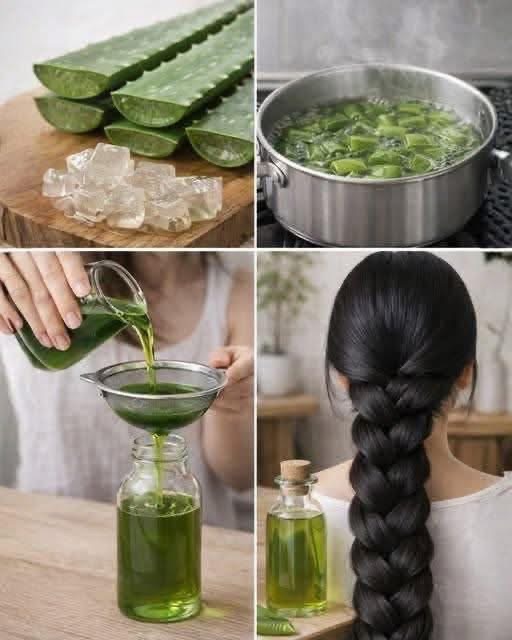
Aloe vera has long been used in traditional hair and scalp care. Combined with a nourishing carrier oil, it can make a simple homemade treatment for dry hair, a dry-feeling scalp, and frizz.
While aloe vera cannot guarantee new hair growth or cure baldness, it can help condition the hair and provide soothing moisture to the scalp.
Ingredients
- 2 tablespoons fresh aloe vera gel
- ½ cup coconut oil, olive oil, or jojoba oil
- 1 teaspoon rosemary leaves, optional
How to Make It
- Cut a fresh aloe vera leaf and rinse it thoroughly.
- Remove the yellow latex near the skin of the leaf and use only the clear inner gel.
- Blend or mash the aloe gel until smooth.
- Gently warm the carrier oil over low heat.
- Add the aloe vera gel and optional rosemary.
- Warm gently for about 5–10 minutes, stirring occasionally. Do not let it boil.
- Allow the mixture to cool completely.
- Strain out the solids and transfer the oil to a clean, dry container.
How to Use It
Apply a small amount to your scalp and massage gently with your fingertips for 5 minutes.
Then work a little through the lengths and ends of your hair.
Leave it on for 30–60 minutes, then wash thoroughly with shampoo.
You can use this treatment once or twice a week.
Potential Benefits
Helps Condition Dry Hair
The oil can coat the hair shaft and help reduce the feeling of dryness and roughness.
May Soothe a Dry-Feeling Scalp
Aloe vera has moisturizing and soothing properties that may feel comfortable on a dry scalp.
Adds Shine
Using a small amount of oil can make hair appear smoother and shinier.
Helps Reduce Frizz
Oils can help smooth the hair surface and make strands easier to manage.
Important Safety Tips
Fresh aloe vera preparations are perishable. Because homemade mixtures containing aloe can spoil, it’s safer to make a small batch, keep it refrigerated, and discard it if the smell, color, or texture changes.
Always perform a small patch test before applying aloe or a new oil to your scalp. Stop using it if you develop burning, itching, redness, or swelling.